Timothy O'Neill
Tech & AI Leader, Violinist, Composer
Priming Humanity for a New Renaissance
The impending dawn of AGI (Artificial General Intelligence) represents a myriad of threats and Opportunities to humankindAn Opportunity is the potential spark of a New Renaissance / Enlightenment with resurgent interest in Aspects that make us uniquely humanOne such Aspect representing the pinnacle of human creativity is High Art forms (particularly classical music)
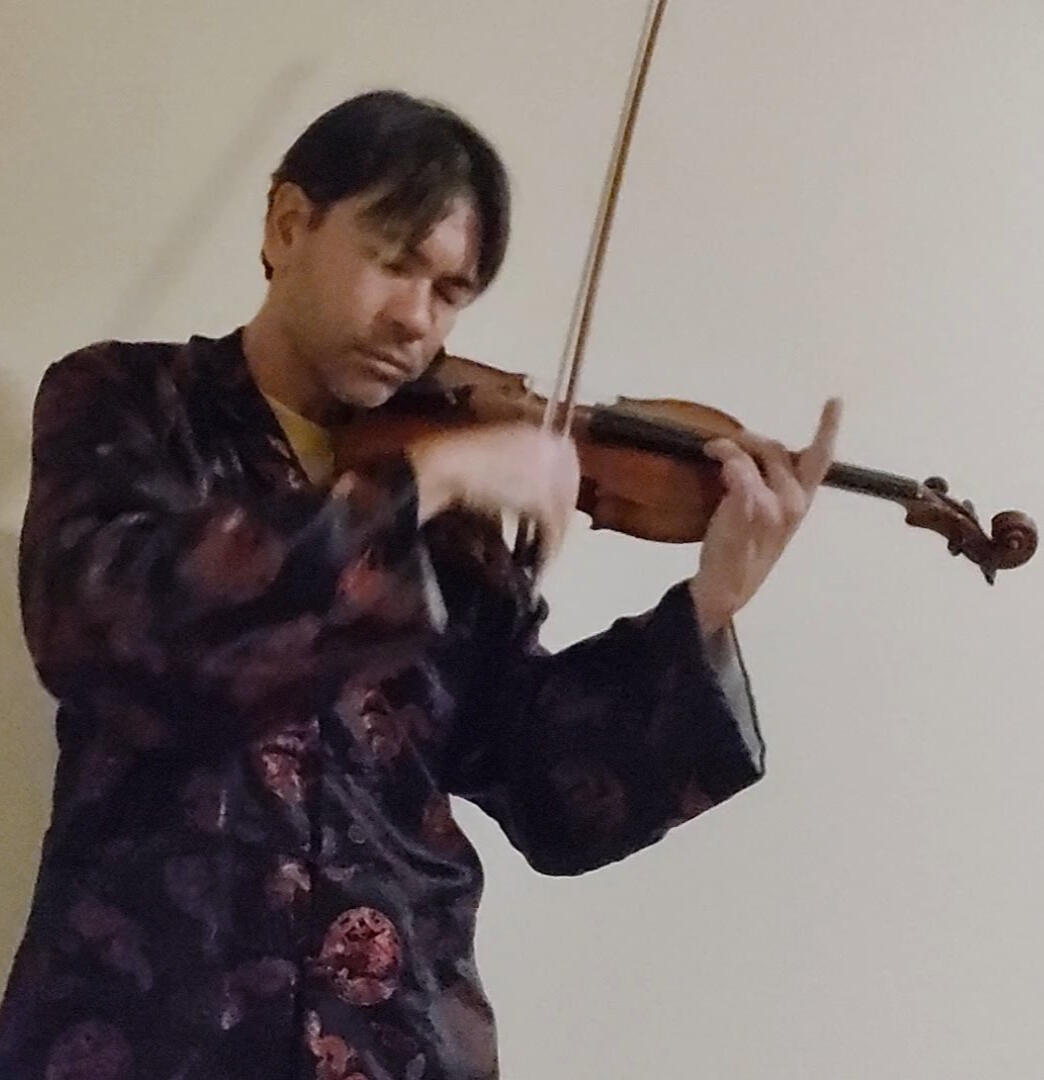
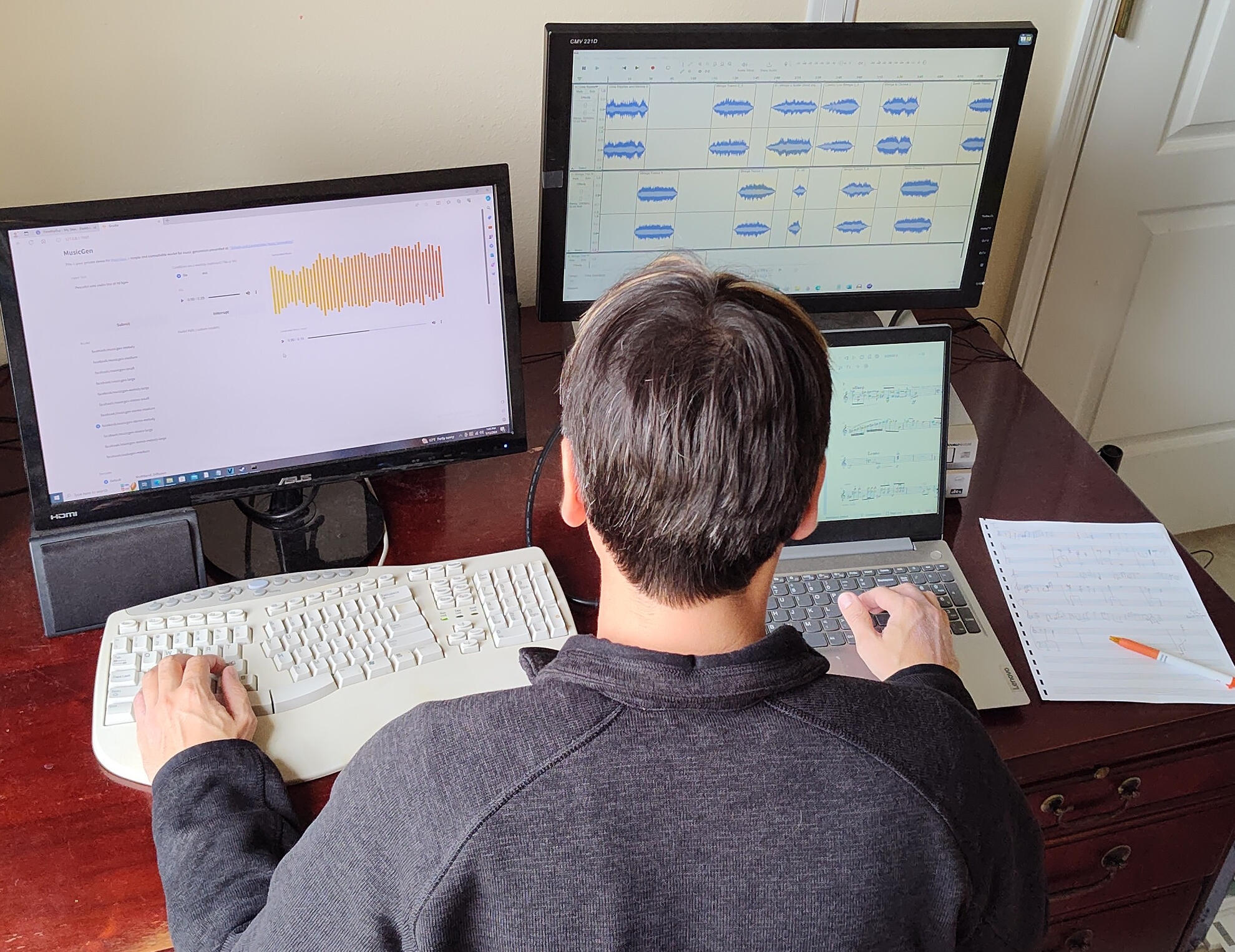
Priming humanity for a New Renaissance
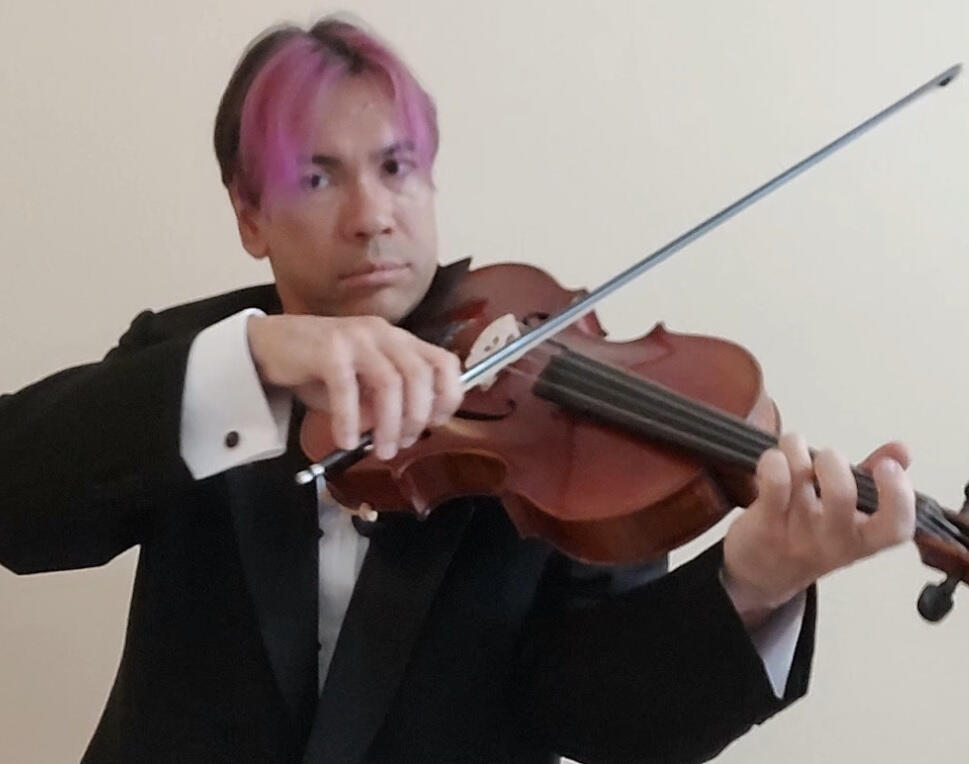
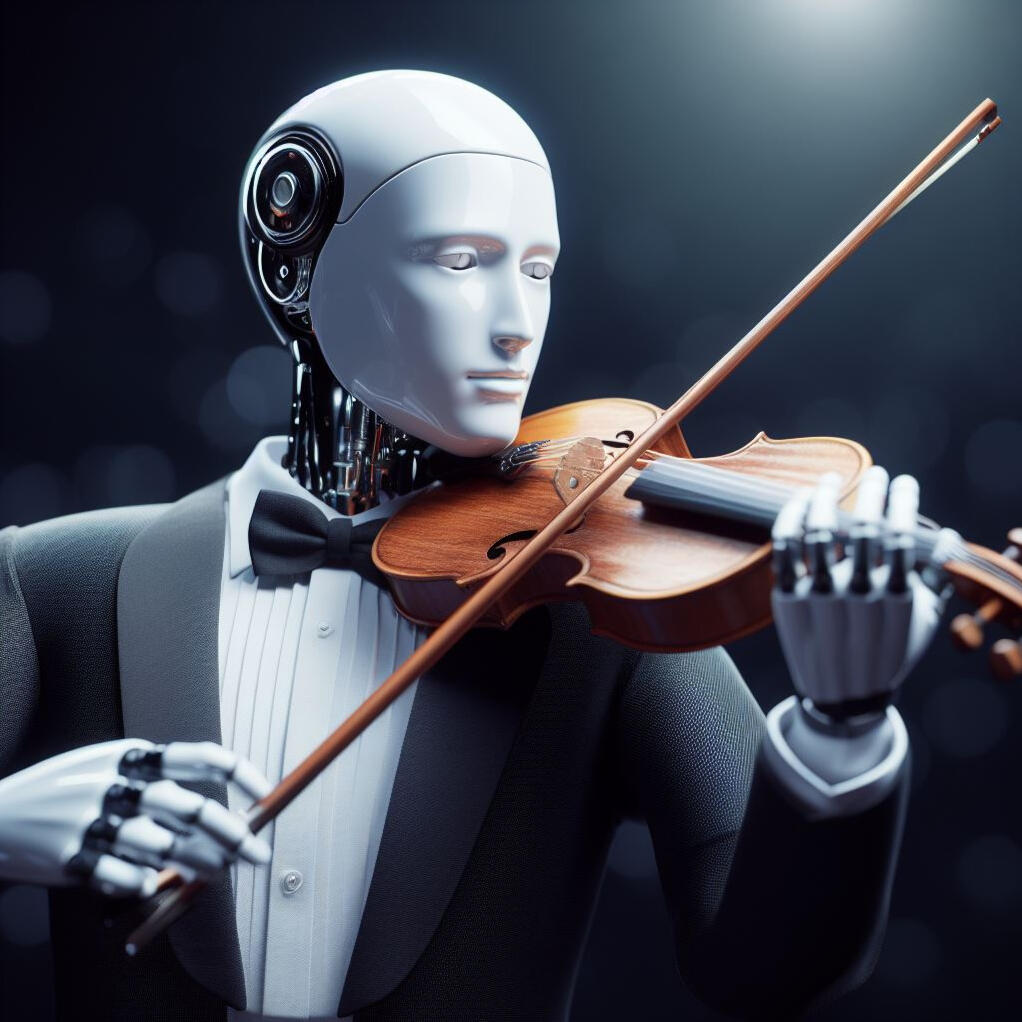
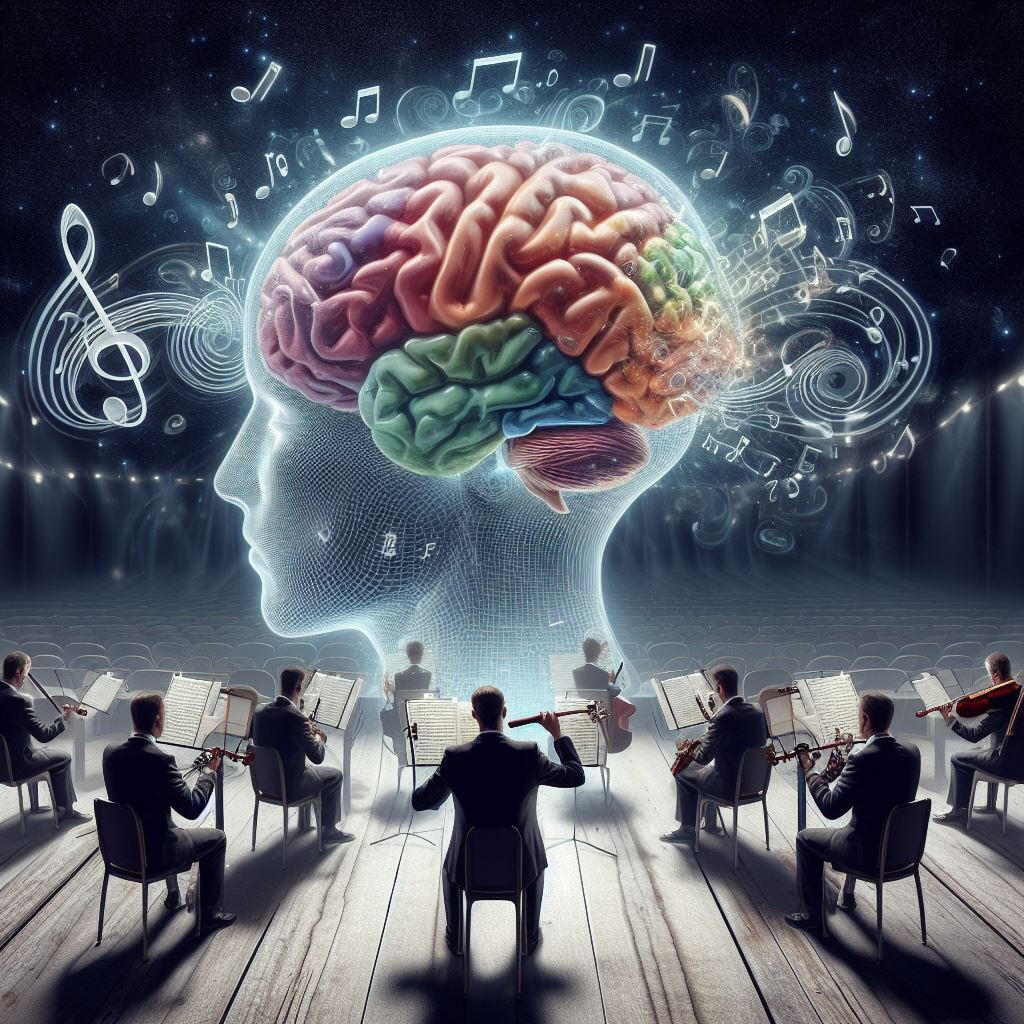
As Artificial General Intelligence (AGI) speeds toward reality within the next few years, it is imperative that we develop a plan to effectively converge Human and AI contributions while preserving the unique power of humans, especially regarding the highest forms of art and creative expression.Classical music in particular is a deep and soul-impacting art form that, despite centuries of historic significance, has declined in popularity and demand over the past few decades. Without intervention, there is risk of further marginalization and even a loss to history outside of museums, archives and background music for advertisements.I believe the current GenAI wave (and eventually AGI) poses a revitalization opportunity
Key Goals to achieve this vision:1. Advance the Craft: Partner with leading tech innovators to train, validate and improve generative music models. Use these models to create impactful content that converges the best of both worlds - Human creativity with AI capabilities.2. Amplify the Influence of Human Artists - including underrepresented cultural & indigenous art from around the world - to reach broader audiences and ensure fair use, compensation and stake during the AI development process. Protect the unique power and creativity of humans by maintaining human-centered design and control.3. Increase Demand of High Art to the general public. Enhance appreciation by augmenting performance participation using personalized Copilots and Recommenders. Improve accessibility by reducing barriers to entry via Content Generators.4. Educate & Connect: Evangelize the Art of the Possible to tech, industry and music/art leaders & institutions. Prioritize relationships by building connections and fostering collaboration across these entities.This video provides additional details regarding these goals
Project: Genflections
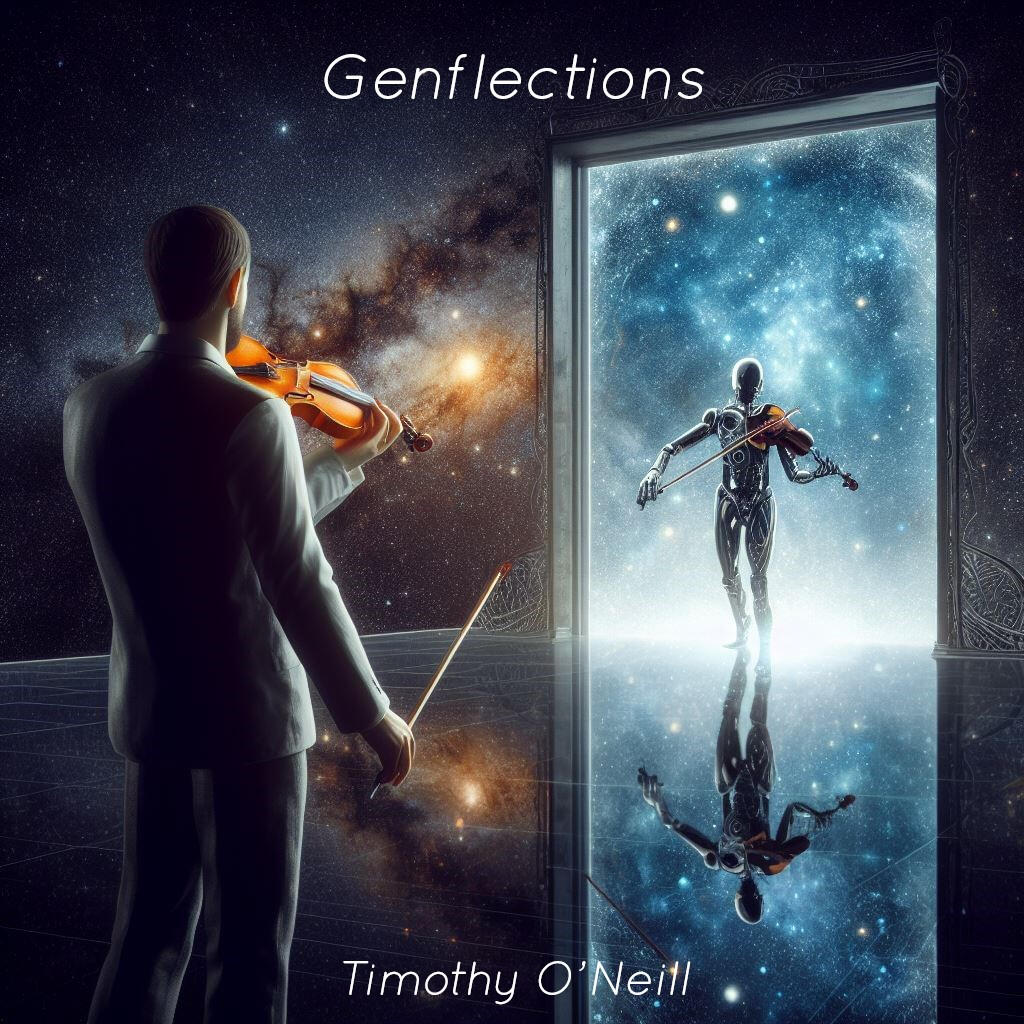
In a world where emergent Generative AI is starting to impact many areas of our lives and Artificial General Intelligence (AGI) is potentially right around the corner, "Genflections" is an audiovisual thought(-provoking) experiment exploring the roles and relationship between humans and AI in the classical music composition and performance process.I. Singularity Mirror
II. Channel Surfing
III. Existential Convergence
Human Composer: Timothy O'Neill
AI Composer: Meta (Audiocraft/MusicGen/AudioGen)
Violinist: Timothy O'Neill
Prompt Engineer: Timothy O'Neill
AI Graphic Artist: Microsoft/OpenAI (MS Copilot/DALL-E)
Audio Production: Timothy O'Neill
Video Production: Timothy O'Neill
Quality Assurance: Monique Garza O'NeillRecorded on 11/25/2023 in Sarasota, FL
About
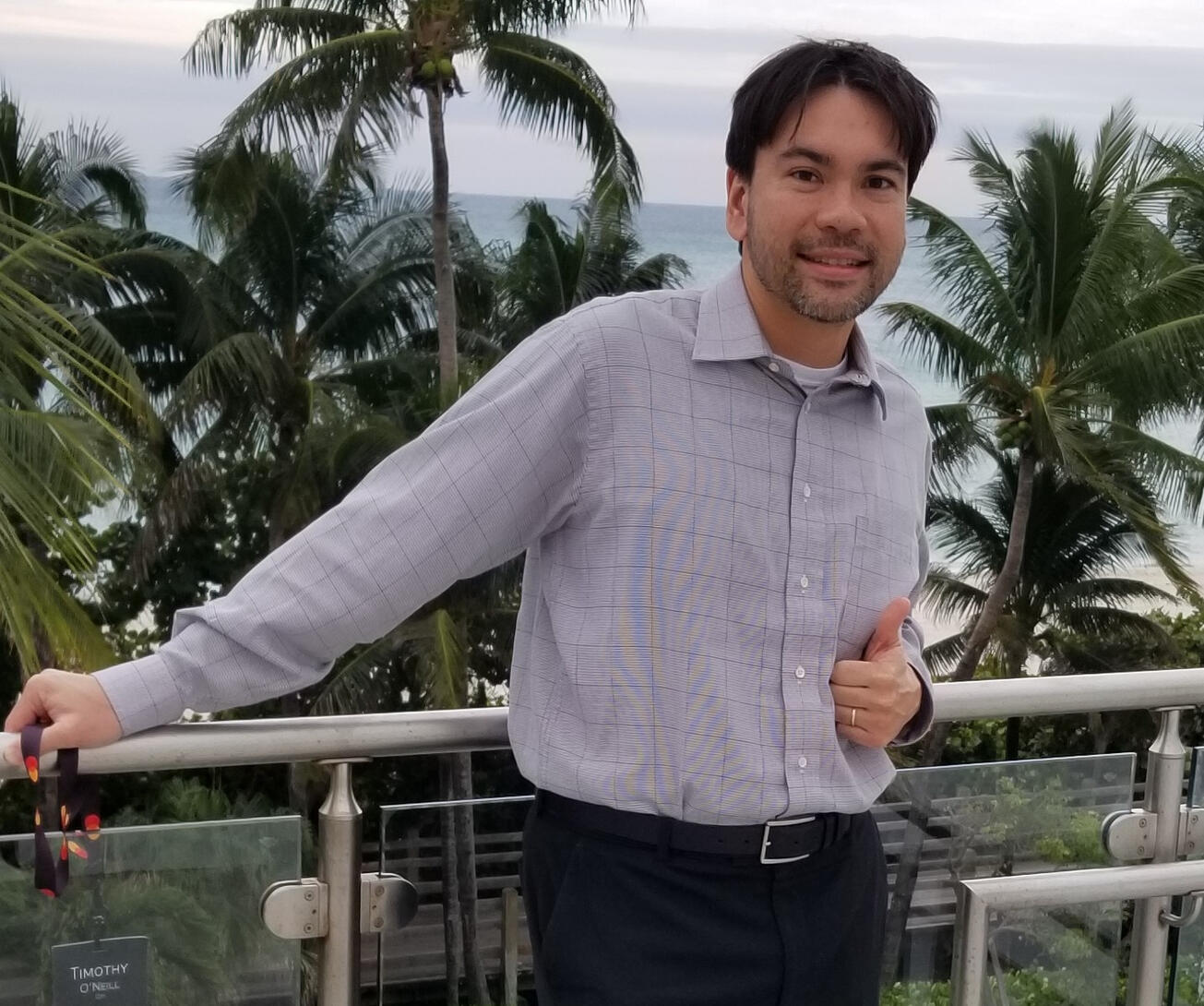
Timothy O'Neill (MS, MM) weaves together a unique blend of high-level expertise and decades of experience in the tech and music sectors.He is primarily employed by a public software company as Senior Director of Engineering & Data Science. There, he manages approximately 150 technical personnel in Product Development, co-leads Artificial Intelligence strategy for the organization and regularly presents to internal and external business leaders on AI's impact to industry. Previous stints include Management, Architecture and Innovation roles at financial services, multimedia production and advertisement firms.As a violinist, he has toured domestically and internationally, soloing with a number of orchestras including the Cincinnati Symphony Orchestra and is featured on multiple recordings and ViolinMasterclass.com. He was a co-founder of NeXT Ens, one of the first electroacoustic ensembles in the US, with performances across the country, numerous world premieres and multiple artists' residencies.As a composer, his debut was at the age of 15 when he conducted the premiere of his first string symphony. His works have subsequently been performed at venues such as the Kennedy Center and New York City Electronic Music Festival.

2024 Schedule
1/12: AI's Impact on Industry & Higher Ed, Bryant University BOD (Palm Beach, FL)
4/19: AI's Impact on Classical Music & "Genflections" Mvmt.1 Premiere (Cincinnati, OH)
4/24-25: AI's Impact on Industry, Paycor Connect+ Conference (Cincinnati, OH)
5/21: The Evolution and Impact of AI on Private Equity (Online)
6/18: "Genflections" Mvmts.2-3 Premiere, NYC Electronic Music Festival (New York, NY)
Please contact me if you are interested in scheduling an event, collaborating or just connecting
Thank you
GENFLECTIONS: Detailed Notes
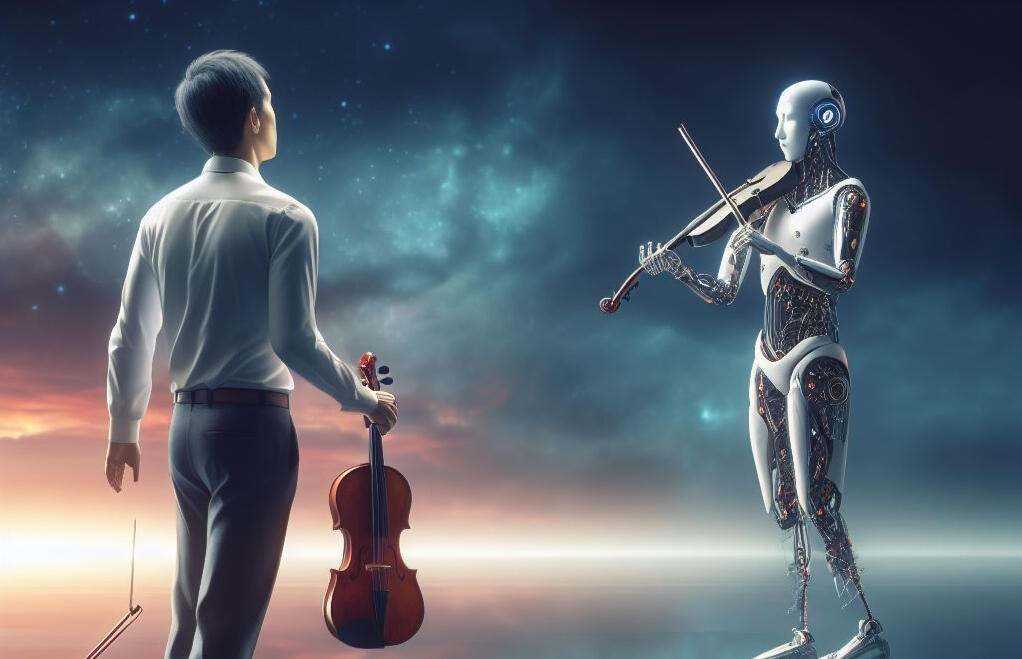
In a world where emergent Generative AI is starting to impact many areas of our lives and Artificial General Intelligence (AGI) is potentially right around the corner, "Genflections" is a thought(-provoking) project exploring the roles and relationship between humans & AI in the classical music composition / performance process
The work is scored for acoustic violin and GenAI (using Meta's MusicGen model). It is comprised of 3 distinct movements with a duration of 17.5 minutes. It also includes a visual element with a set of AI-generated images (by Microsoft Copilot / OpenAI DALL-E) incorporated into the video recording or played back via slideshow during a live performance.Key issues this project wrestles with:
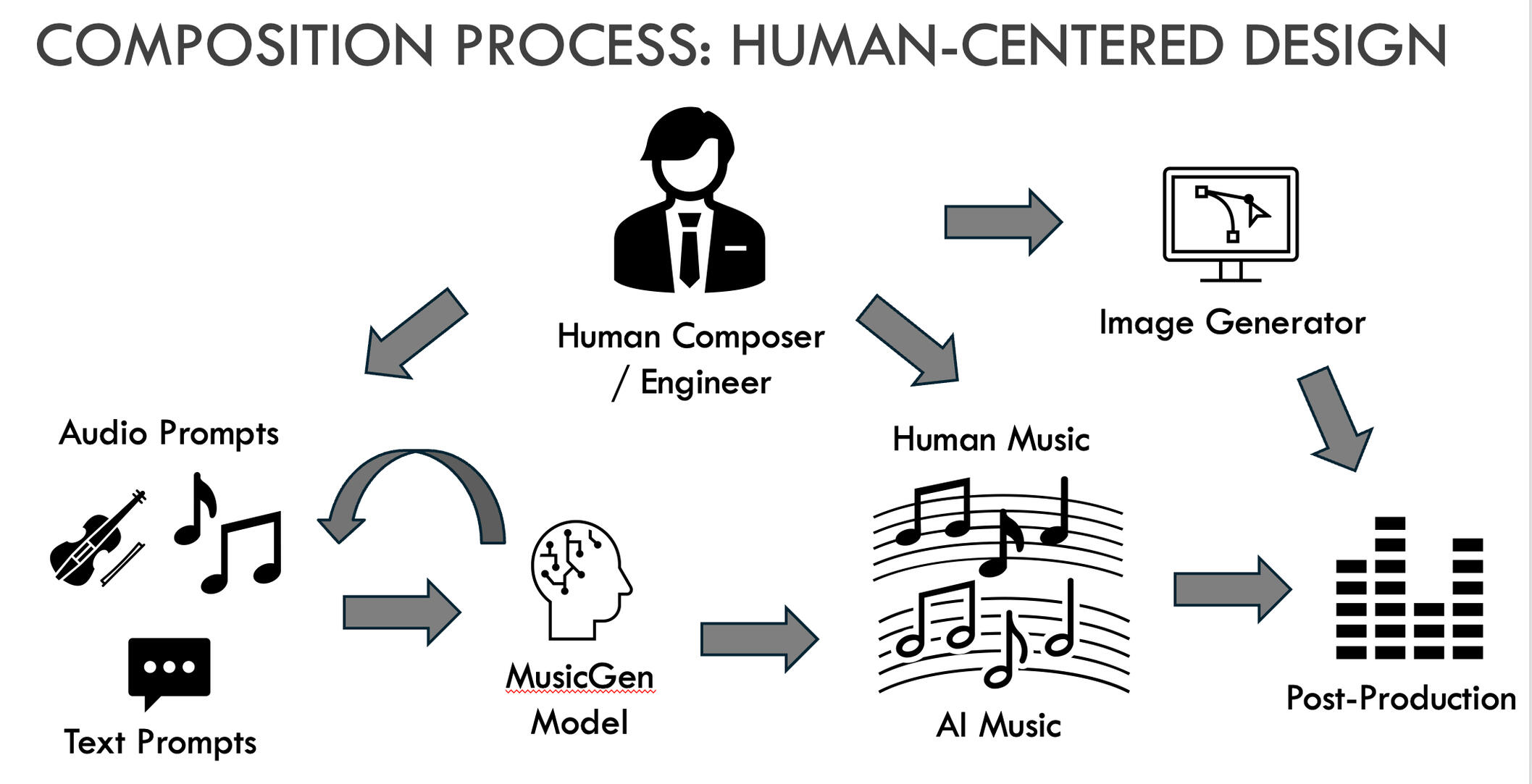
1. Compared to text and image formats, music generative models are currently limited in output duration, not specifically trained for the classical genre, cumbersome to setup and are poorly supported. Specialized expertise was required.2. For GenAI in general, regulation is still emerging: the US's Executive Order and the EU's "AI Act" are two recent milestones. Thus, many businesses and artists are taking a "proceed-with-caution" approach to the development and usage of AI. Cases are also starting to appear in the court system regarding potential intellectual privacy violations from data ingested during the model training process. To mitigate this issue, I used open-source models under the MIT license where the creator owns the rights to the training data.3. Moral concerns: there is fear and uncertainty across many areas of life and industry regarding the possibility of AI and automation making humans redundant in the future. On the creative front, a prime example is controversy surrounding art contests that have awarded prizes to AI-generated art over human art. The approach I've chosen to reconcile this concern is to keep myself as the human at the center of the design process (e.g. human-in-the-loop) and delegate selective tasks to AI.
Program Notes of Specific Movements:
The first movement ("Singularity Mirror") represents the hypothetical experience of gazing into a reflection surface and seeing your AI counterpart (having reached singularity) looking back and mimicking your every move. The composition of this movement used a form of human-driven reinforcement learning: the human composer started with the initial fragment, prompted it to the AI which generated 3 possibilities as a next segment. The human selected the "best" option and then composed a subsequent fragment based on it; this process is repeated throughout the duration of the movement. The composer's writing style in this movement is heavily influenced by Bela Bartok, particularly the use of non-traditional scale patterns such as whole-tone and octatonic.The second movement ("Channel Surfing") starts with a clip wholly generated by AI through a text prompt. While the initial prompt had called for "an electric viola lick with minor distortion", the resulting output contained a lot more noise than originally anticipated. This unintended consequence sparked the imagery of someone trying to tune a bad, out-of-band radio, which subsequently became the inspiration of the rest of the movement; thus, all clips are based off of that original track. Despite the wildly divergent styles (some of which draw upon a number of folk styles from around the world) between the individual clips, a unified tonality ties them together through a blues-like nonatonic scale: Eb, F#, G, Ab, Bb, B, C, C#, D. The exception is a "hallucination" in the middle of the movement that serves as an interlude and provides a striking contrast to the rest of the movement's intensity. The human performer takes a backseat in this movement by providing only improvised accompaniment based on a set of pre-written instructions/guidelines. This movement's audio track is coincidentally 4'33" long, which begs the question: "from a human audience's perspective, is that time better spent experiencing how humans or AI fill the space of silence?"The third movement ("Existential Convergence") invokes shades of Charles Ives' "The Unanswered Question." This is fully intentional: on one level, it functions as a commemoration of the upcoming 150th anniversary of his birth and the 80th of his death in 2024. On a deeper level, it serves as a similar statement of existentialism, from the perspective of the human as well as the AI. At the start of the movement, each entity stands on its own but by the end, the two have merged - perhaps this is a foreshadowing of our future but perhaps not. At the inflection point just before the merge, the old hymn "Watchman, Tell Us of the Night" is the last individual statement of identity from the human and is a final tip of the cap to Ives (the hymn appeared in his First Violin Sonata and Fourth Symphony). The sentiment of the movement starts from a dystopian mood gradually transitioning to a serene conclusion, reflected in the harmony and imagery. In conclusion, it may be more apropos to think upon this movement as "The Unquestioned Answer."